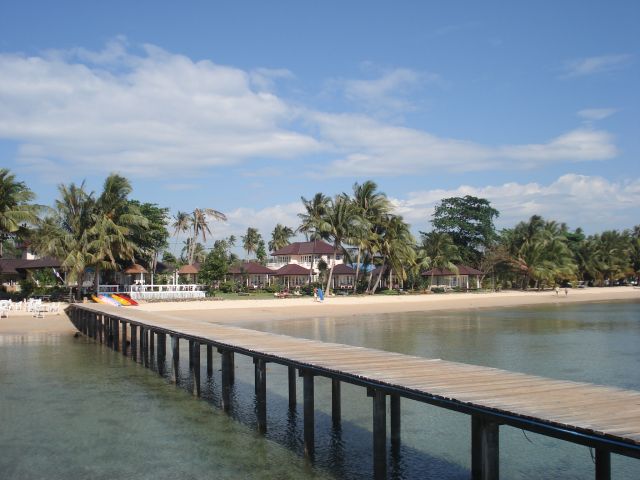
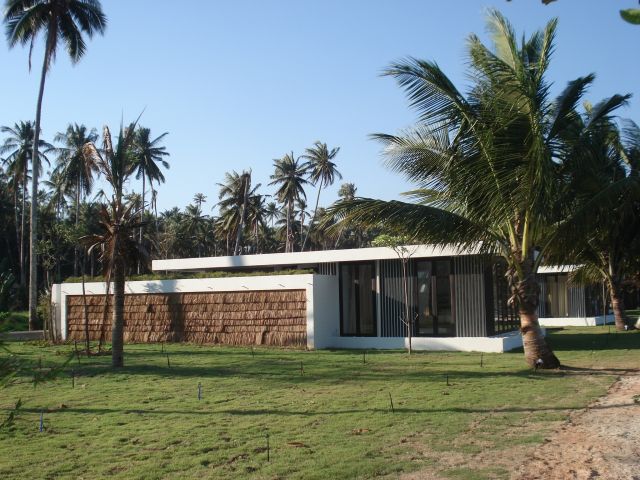
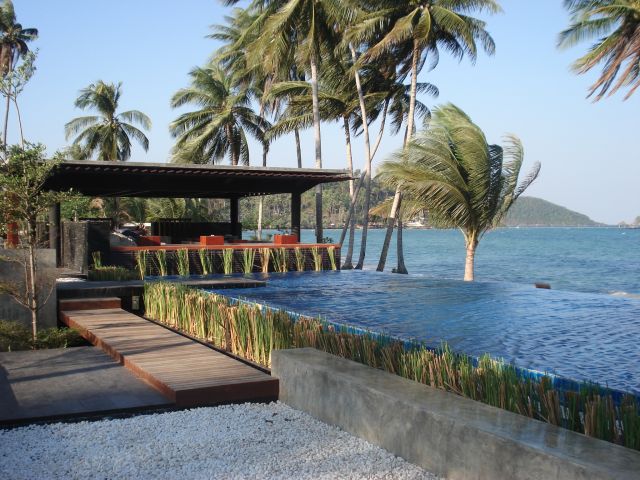
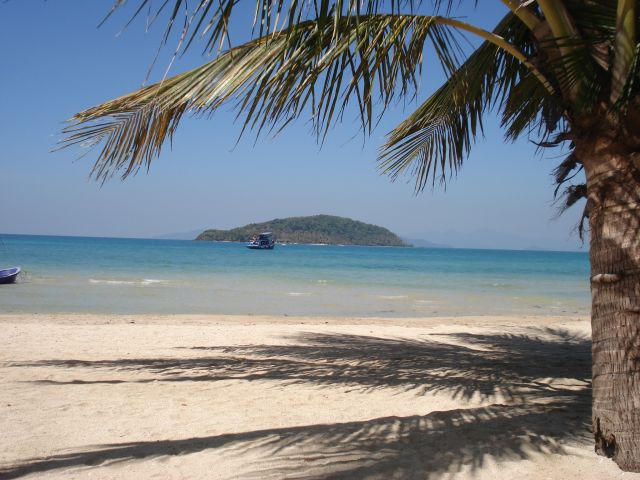
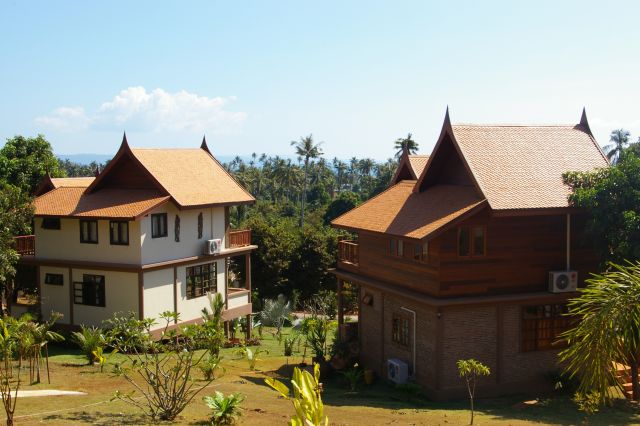
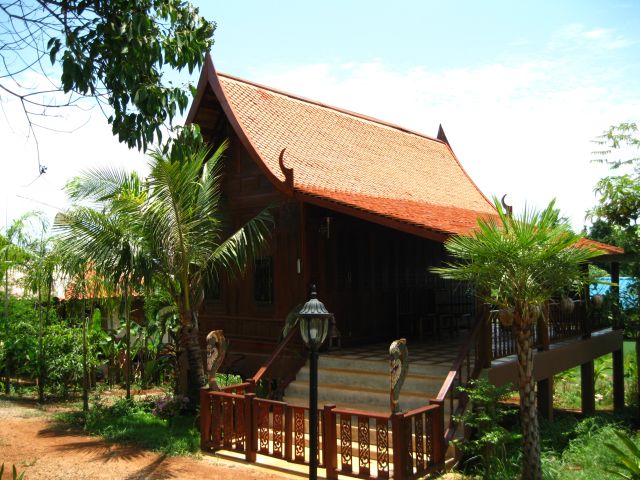
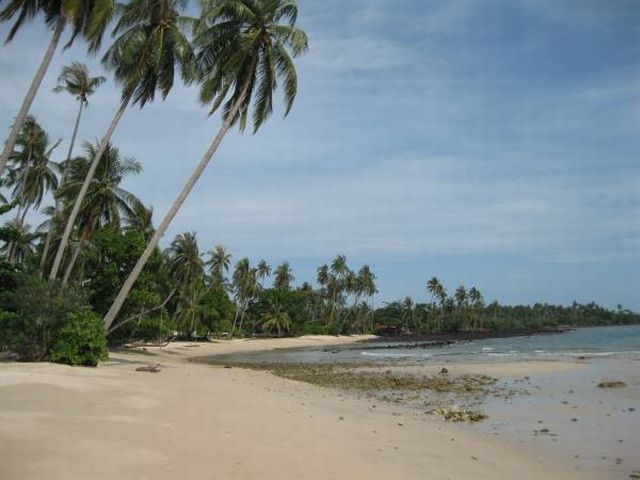
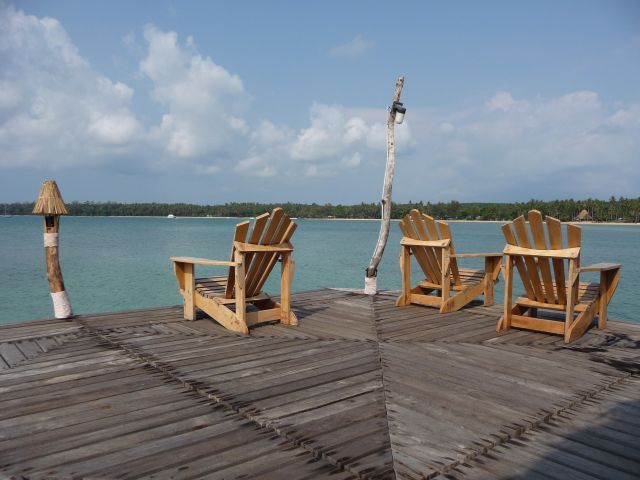
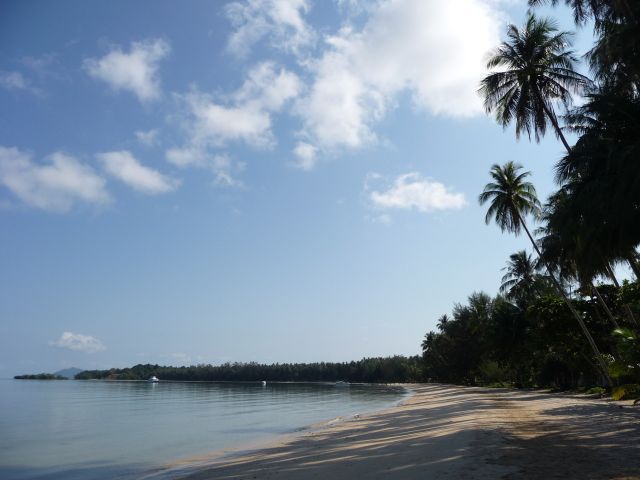
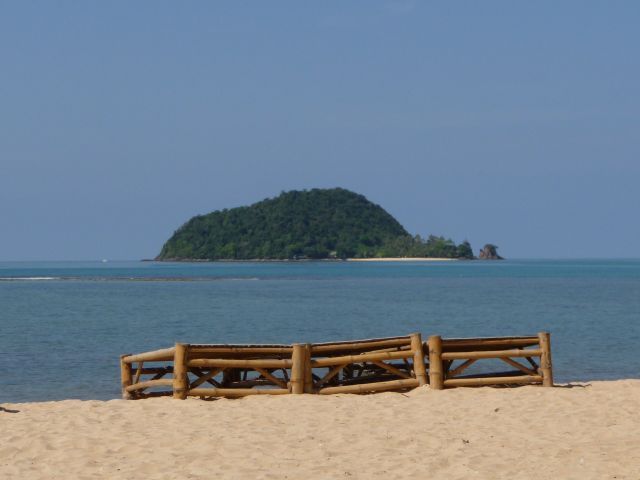
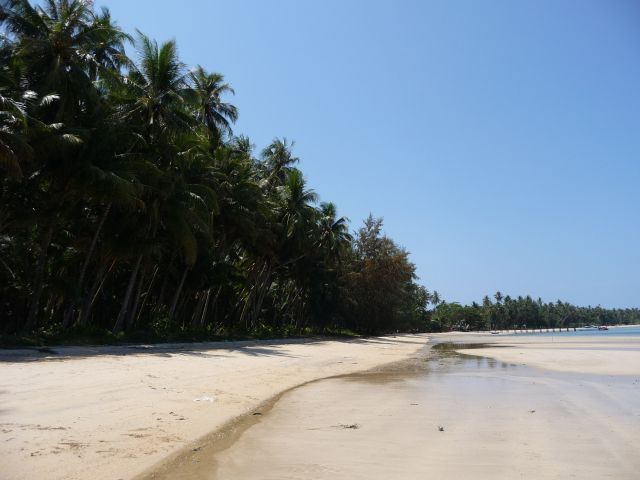
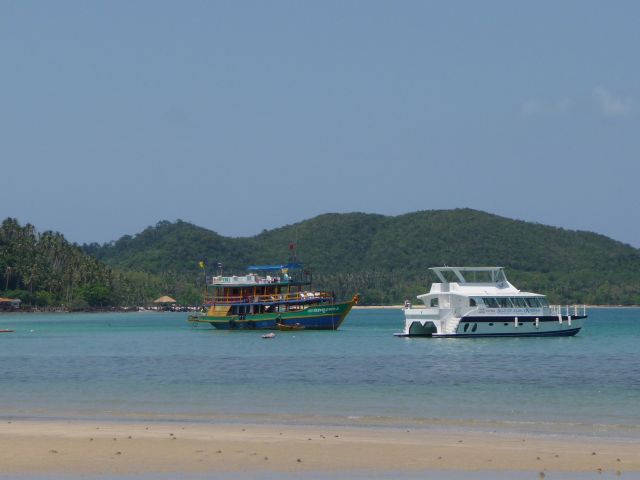
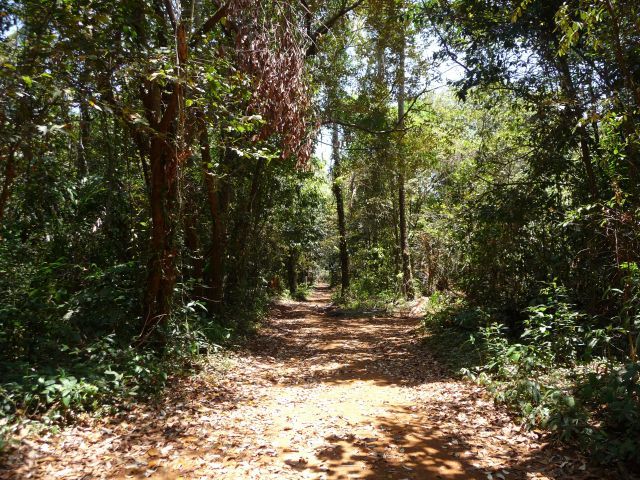
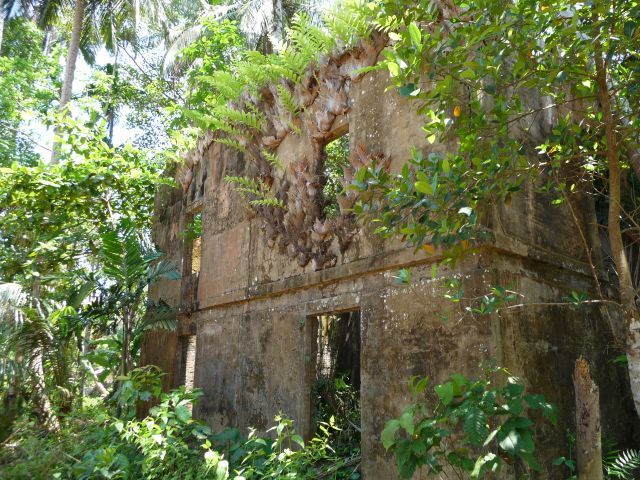
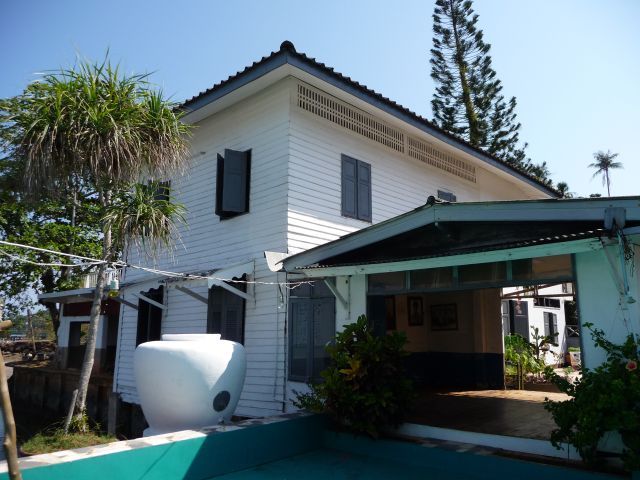
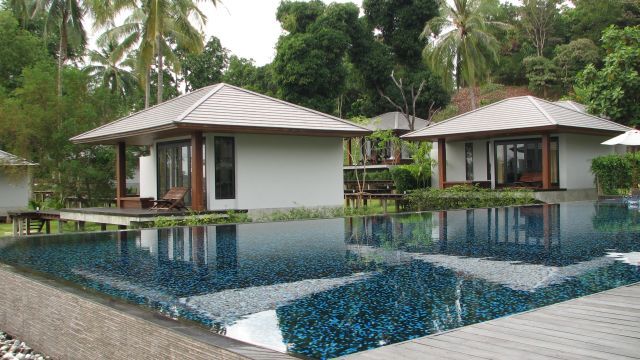
Koh Mak ( or Koh Maak in some guides ) is located in the Marine National Park in Eastern Thailand, around 40Km from the Trat coast and 20Km south of Koh Chang. It is around 16km², too big to walk around but easy to see by bicycle. The roads are very quiet as there isn’t a vehicle ferry to the island. Koh Mak is also relatively unknown. This means that it isn’t over run by package tours and and is still a well kept secret for most travelers.
Koh Chang is growing every year with more and more shophouses, bars, restaurants and nightclubs. Whereas development on Koh Mak is limited to small restaurants, minimarts and a few resorts. It’s growing but at a much slower pace.
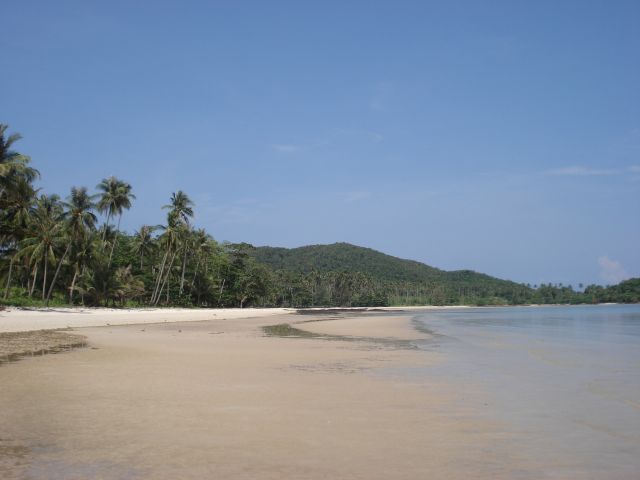
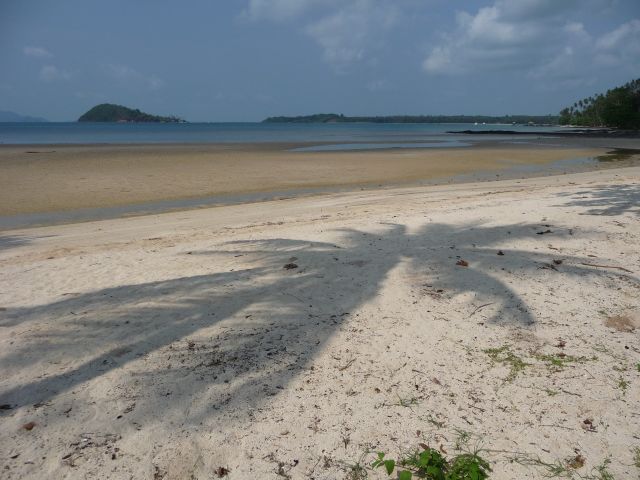
Koh Mak is a quiet location for people who are looking for a relaxing holiday. If you are looking for long deserted beaches then you’ll find them on Koh Mak. There aren’t any jetskis or beer bars. So it isn’t for someone looking for an alternative to Phuket or Pattaya. The island has beautiful nature which is perfect for hiking trips. There is also a diving school where you can book diving and snorkeling trips. The nearby Marine Park has the best selection of marine life Thailand has to offer.
Activities on offer include diving – there are a couple of PADI certified dive centres, snorkelling, kayaking, Muay Thai and cycling on the many tracks and trails that lead to remote beaches. Or you could just laze by the beach or get a traditional Thai massage.
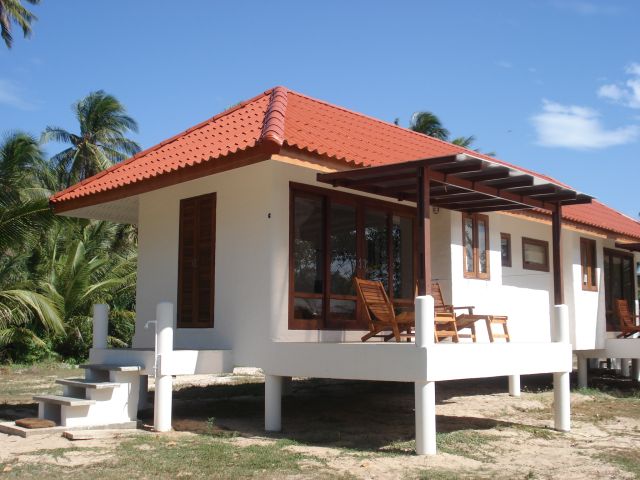
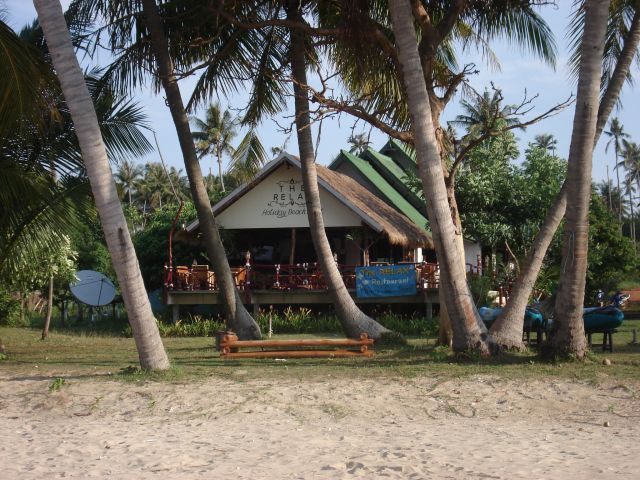
Koh Mak resorts and bungalows are located mainly on the beaches of Ao Kao and Ao Suan Yai. Popular resorts include Seavana, Koh Mak Resort, Lazy Day and Big Easy. All offering a different type of ambiance and catering to different types of visitor. There isn’t a large choice of budget accommodation but you’ll find a friendly welcome and good value rooms at numerous small resorts and guesthouses.
And if you are backpacking on a tight budget then the easy going, Island Huts, with little wooden cabins on the beach at 400 Baht.
How to Get to Koh Mak
Getting between the island and the mainland is now relatively simple with speedboat services running year round to and from the mainland pier in Laem Ngop, Trat.
If you are flying on Bangkok Airways you can still get to Koh Mak the same day on either the morning or lunchtime flight to Trat Airport. Although boats between Koh Mak, Koh Chang and Koh Kood do stop between June and September.
The beaches on Koh Mak
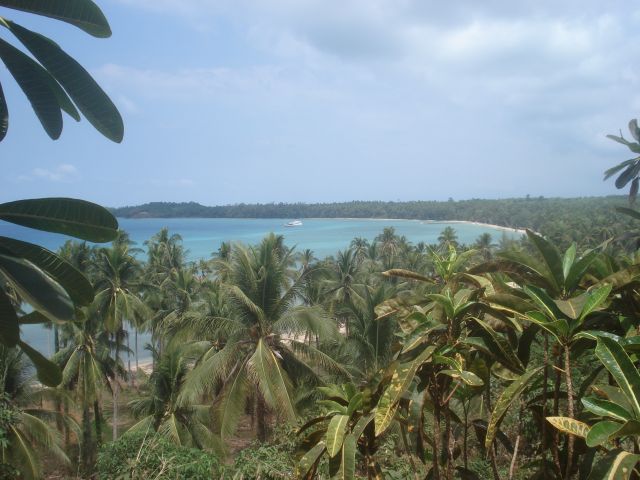
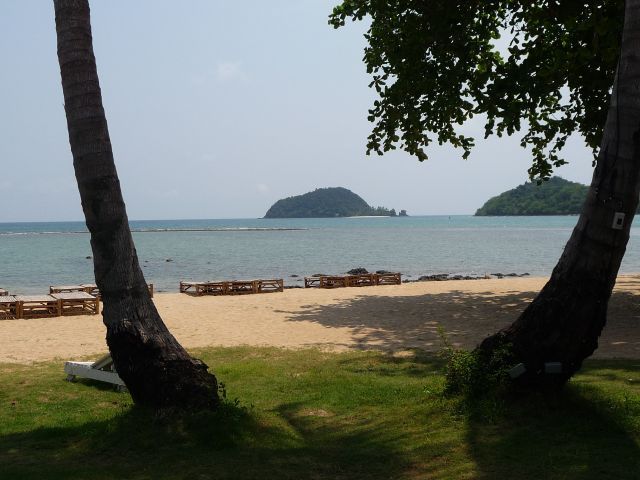
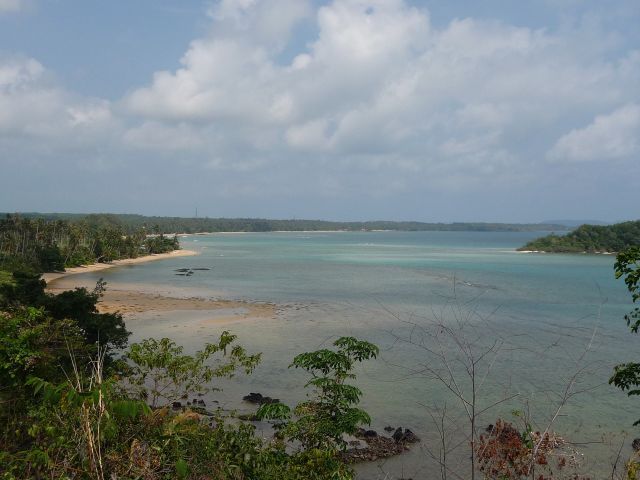
You’re almost certainly coming here for the beaches. Take a look at the ‘Koh Mak Beach Guide‘ for photos of what to expect. There are two main beaches which are home to the majority of resorts. But you will find smaller beached dotted around the island. Take time to explore by scooter or mountain bike and follow the dirt tracks to the shore. You’ll often come to deserted beaches with no resorts or signs of life.
Koh Mak is not a destination for anyone interested in filling their days with noisy activities. Sure there are some trips and tours you can do but on the whole it is a place to go to do very little except laze and enjoy the local hospitality, clear sea and kilometres of empty beaches.
But if you want some gentle exercise come and join us at Coco Cafe for a 8Km bicycle tour of some of Koh Mak’s lesser seen sights or a game of beach volleyball. Cycling tours are at 09:00 & 16:00 in high Season. 150 Baht per person. Beach volleyball matches are held every afternoon / evening at Coco Cafe’s ‘sandfly -free’ volleyball court.
Now you have a taste of what Koh Mak offers and what makes it a special destination, feel free to explore the rest of this site. We have tried to include as many of Koh Mak’s resorts, restaurants and activities as possible in order to give you a full picture of Thailand’s Family Island.
How Busy is it?
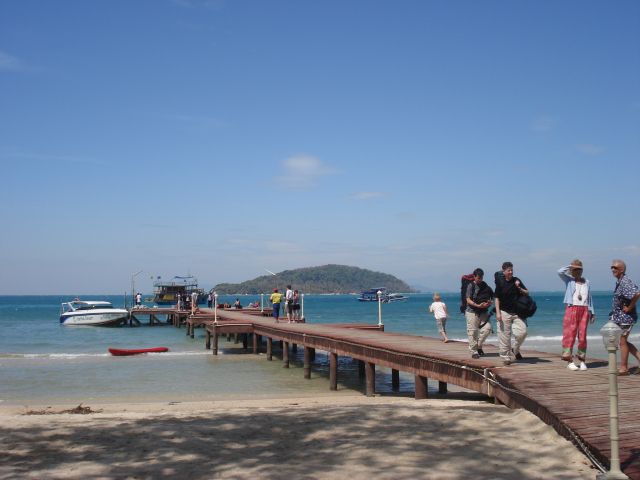
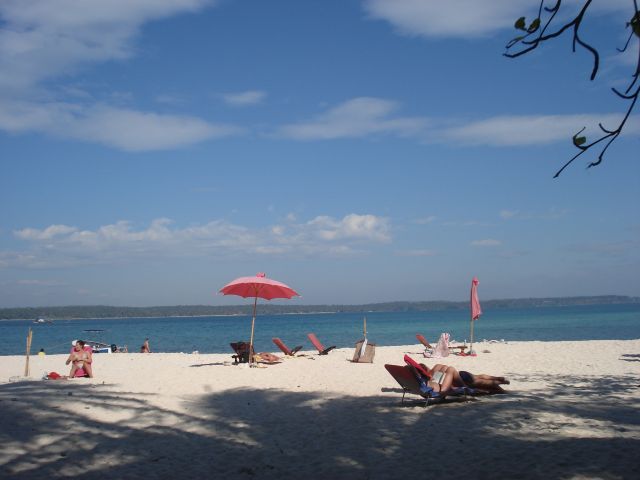
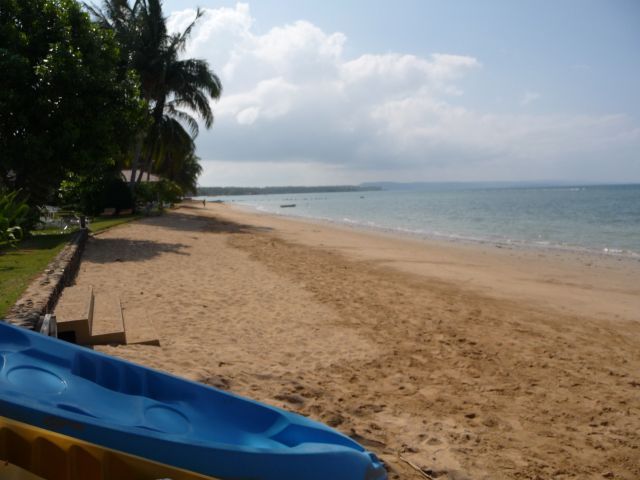
Not matter when you visit, it rarely seems busy and you can always find a deserted stretch of beach to swim. The beach below is the second busiest. I took this photo on beautiful day in the 2018-19 High Season.
So far the members of the five local families who still own the vast majority of the land on Koh Mak have managed to keep developers at bay and have encouraged smaller bungalow resorts and upmarket boutique resorts. You’ll also find Koh Mak to be a quiet place – there are no beer bars or loud karaoke places and very little traffic as there are only passenger boats to the island.
The five families are all descendants of Lung Prompakdee, a Chinese Affairs Officer during the reign of King Rama V in Koh Kong, now part of Cambodia. He bought the island, for the sum of 24,000 Baht, from Chao Sua Seng who had previously established the first coconut plantations on the island. Another think that makes Koh Mak’s history unique is that it has been well documented by generations of family members. There is also a small museum, at Koh Mak Seafood restaurant, with old photographs dating back to the early 20th century.
Until the early 2000’s there were only a handful of resorts and these mainly catered to Thai visitors booking packages that included transport from the mainland and all meals. So development outside these resorts was limited.
Koh Chang
Some websites that you might find useful if you are also visiting Koh Chang . . .
There are very few islands in Thailand which are still in the same hands as they were over a century ago. There are even fewer which have a written history covering this period. This is the story of the family who to this day still own over 80% of the island of Koh Mak (Ko Maak). We’ll cover the period from its purchase by Luang Prompakdee, through the French occupation, to the present day.
Family Origins
Koh Mak was first settled by Chao Sua Seng, who established a coconut plantation on the island and who occupied the post of Palad Jeen, or Chinese Affairs Officer, during the reign of King Rama V (King Chulalongkorn). Later, Chao Sua Seng sold his coconut plantation to Luang Prompakdee, who also held the post of Chinese Affairs Officer and who came originally from Ban Koh Po in Prachankiriket province. This is now the province of Koh Kong in Cambodia, but at the time it was a province of Thailand.
Ban Koh Po (Koh Po village) was a sub-district of Prachankiriket province, (Koh Kong) and was located on the banks of the Koh Po River. This village has a long history, and was densely populated, and in the days of Rama IV, it was an administrative and trading centre. The offices of the Royal administration were there, and the offices of the appointed Governor of Prachankiriket, Prapicha Chonlathee.
In the 19th Century this was a place from which agricultural products were sent by sea to be sold in Bangkok, especially rubber and ‘rong thong’ (gamboge, a kind of gum resin collected from a tree and used as a colourant in paints and dyes). Every aspect of a modern, wealthy, progressive society was concentrated within Ban Koh Po. Royal officers and prosperous families lived there, and traders, some of whom traded on a large scale. Large sailing ships came to and fro, carrying on a constant trade with Bangkok.
Records show that in Ban Koh Po, there was a tax collector called ‘Nai Kong’ who was charged with collected taxes from the gamboge-tappers and sending the taxes to the Royal Finance Bureau. Historical evidence shows that he was responsible for the gamboge-tax from 2411 to 2435 B.E., that is, 1868-1892, in the reign of Rama IV.
Also living in Ban Koh Po was the family of Luang Prompakdii and Khun Mae Mulee which was one of the best known, most respected and prosperous in Prachankiriket. Luang Prompakdee’s trading interests were highly diversified. His trading post and house were situated right in the centre of the village, on the river bank, by a pier that stood out into the river. North of this pier were terraced houses for workers and servants; and south of the pier stood Luang Prompakdee’s own house, built in the old Thai style with a high, steep roof and a verandah looking out over the river.
Further along from Luang Prompakdee’s house were the houses and offices of other traders, and the houses of royal officials and villagers, all settled very closely together along the river bank. Then came the house of the Governor, Prapichaichonlathee; then more houses, and so right out to the edge of the village.
It was King Rama V who reformed the administrative system away from direct royal rule to a system of Ministries, each Ministry being responsible for a particular aspect of administration. (Very similar to the system used in modern day Thailand.) However, the administrative reforms of Rama V brought big changes to Prachankiriket. Old procedures were abolished and government offices were relocated from Ban Koh Po to Tambon Laem Dan at the mouth of the Tapangrung River, inside the Straits of Kong. As these changes were taking place Luang Prompakdii and Khun Mae Mulee were busy expanding their own business interests in the area.
The Timber Business
As changes in local administration were taking place Prachankiriket, Luang Prompakdii and Khun Mae Mulee were busy expanding their own business interests in the area.
They set up a timber factory and bought mangrove wood on the southern banks of the Bang Krasop River, a place which is still known as Rong Pheen (‘Wood Factory’) to this day.
The province of Prachankiriket had very large mangrove forests covering the flooded, muddy estuarine areas. Every area of mangrove forest was a flooded zone. This forested area was interlaced with many creeks, and the mangroves flourished there plentifully.
At that time, charcoal-burning was not being done in that area. Luang Prompakdii and Khun Mae Mulee were the first traders who bought mangrove wood and shipped it to Bangkok on a regular basis by large sailing boat. On its return journey, the boat brought back goods from Bangkok for sale in Prachankiriket.
The Purchase of Koh Mak . . . For 24,000 Baht
Khun Mae Mulee was highly respected by the people and known for her devotion to Buddhism. She owned rice fields which she rented out, collecting the rent in rice; part of this rice was set aside so that it could be given as alms to the monks on a regular basis.
With her close connections to traders and royal officials, Khun Mae Mulee was well informed, and this is how she learned that Chao Sua Seng, another of the Chinese Affairs Officers, wanted to sell his coconut plantations on Koh Mak. Khun Mae Mulee agreed to buy the plantation for the sum of 300 Chang, which was the name of the currency in those days (One Chang = 80 Baht).
And that is how the coconut plantations on Koh Mak, which covered the entire island, came into her family, in whose possession they have remained to this day.
French Colonisation
As is recorded in history, Bangkok was built in 1782 at the start of the Chakri Dynasty and until the reign of King Rama IV, or around 1857, the security of the kingdom was endangered by the colonial ambitions of the French. The French invaded Vietnam in 1858 and seized many important cities such as Saigon and Binh Hoa; later they took complete control of the whole of Vietnam.
It was shortly after the island was purchased that the political situation in Prachankiriket began to feel more uncertain. This was the heyday of European colonialism, when the nations of Europe were competing to exploit nations throughout Asia and the other continents. Lands belonging to many less developed countries were seized by the British & French. On Thailand’s borders, the British took control of Burma & Malaysia, whilst the French seized Vietnam, Laos and Cambodia.
The French did not use force against Cambodia as they had against Vietnam. Here they resorted to a softer, diplomatic approach by sending a representative to negotiate with the King of Cambodia, proposing that Cambodia should become a French ‘protectorate’. Eventually the Cambodian monarch acceded completely to French wishes.
It was easy for the French to use their great military force to impose their will on Thailand’s neighbours, who were in a weak position and unable to fight back.
In their ambition to expand their power, the French had their eyes on a large area of Thailand bordering on Cambodia: Pratabong (now the Cambodian province of Battambang), Siamrat (now integrated into Cambodia as Siem Reap) Srisophon and Prachankiriket. All of these were then Thai territories.
The French tried to force the Siamese rulers to accept that the land to the east of the Mekhong River should be under their control. This included the North and South of Laos, the country of the Laotian people, whose relationship to the Thais went back many generations.
Realising that Thailand would not be overcome or bullied easily, the French then took matters further and launched military offensives against Thailand and eventually annexed the province of Prachankiriket which then included Koh Mak.
Prachankiriket Under French Rule
Historical records show that the French occupied the eastern seaboard of Thailand from 1893 – 1904. During this time the Thai King, Rama negotiated with the French and it was finally agreed that the French would withdraw from the area around Chantaburi in return for the province Prachankiriket (now part of Cambodia) which lay to the south of Trat.
After Prachankiriket fell to the French, the lives of its people changed in every respect. The French sent Khmer military and civilian personnel, from Cambodia, to administer the province. To the locals, these were foreigners, who spoke a foreign language. Historians record that the Khmer officials dealt with the local people in an overbearing way and demanded forced labour.
As for Luang Prompakdii and his family, they already had bought the coconut plantation on Koh Mak, a secure property firmly within Thai territory, far from the oppressive rule of the French. Yet, he still felt tied to his home in peaceful Ban Koh Po, and to his relatives and friends. His business was prosperous and comfortable, and he was leading a very good life. And so Luang Prompakdii continued to live at his house in Ban Koh Po long after the French took over. The responsibility for looking after the coconut plantation in Koh Mak he gave to his sons.
However, one night an incident occurred which changed his mind about staying on.
Why Luang Prompakdii Moved to Koh Mak
The wealthy people of the region were concentrated together in Koh Po village, because it was still the centre of trading, just as it had been when it had belonged to Thailand. One very rich trader in Koh Po was Luang Panom Tao, or Chao Sua Tao. He was known far and wide on account of his wealth, which came from trading in timber, herbs and herbal medicines. Luang Prompakdii was a close friend of Luang Panom Tao. Later one of his daughters would marry one of Luang Panom Tao sons.
Then one night in 1910, in the sixth year of French rule, Luang Panom Tao’s house was burgled and most of his savings, in the form silver coins and ingots were stolen. Seeing what had happened to his close friend, Luang Prompakdii became considerably more and later that year moved his entire family to live on Koh Mak.
The Settlement of Koh Mak
There was an abundance of land on Koh Mak. Some parts of the island were old orchards, but much of the land was uncultivated, and these virgin lands were cleared and cultivated by Luang Prompakdii’s children.
Luang Prompakdii and Khun Mulee both were devout Buddhists and built a temple on Koh Mak. Then Luang Prompakdii built a large sala (hall) for the temple of Wat Pai Lom in Trat province. They kept working on their plantations in Koh Mak, with their children, until the end of their lives, and passed away at an advanced age on the island of Ban Suan Yai.
Through their diligence Koh Mak was cultivated with coconut and para rubber plantations, all owned by members of the extended family. The children of Luang Prompakdii, on receiving their inheritance from his coconut plantations, divided up the unoccupied areas of the island for their children and grandchildren. Eventually all this land became cultivated with coconut palms and para rubber, leaving no land for outsiders – except that which family members were willing to sell.
At present, Koh Mak is still very rich with coconut and para rubber plantations. Many islanders still work in agriculture, although nowadays the tourism is playing an increasingly larger role in island life.
The Start of Tourism on Koh Mak
It may be a surprise to learn that although tourism is still very much in it’s infancy on Koh Mak, the first bungalows for tourists were built over 30 years ago at Ban Ao Nid on the east of the island. The remains of what was known as ‘Koh Mak Resort’ can still be seen in the sea close to the main pier. However, three decades ago transport and telecommunications were not what they are today and with only a small number of intrepid tourists making it to this part of Thailand the lack of infrastructure made business difficult and put paid to the development of the island for another decade. The first organised group of western tourists were a group of German divers.
But before all this Koh Mak was on the route of a passenger steam ship that sailed from Bangkok to Koh Chang, Koh Mak, Koh Kood and onto Cambodia and Vietnam in the early part of the 20th Century. This carried visitors to the island and also goods.
However, by the late 1980s the two main beaches on Koh Mak, developed into tourist attractions. Bungalows and resorts were built to serve Thai and foreign tourists properly.
Nowadays Koh Mak has something for everyone from cheap bamboo backpacker huts to a variety of mid range bungalow resorts and upmarket boutique establishments. Plus of course the small private resorts on the islands of Koh Kham and Koh Rayang, for people who really need to get away from it all. No wonder that in October 2006 the Sunday Times newspaper included Koh Mak in it’s list of the world’s ‘Top 10 Secret Beaches’.
Koh Mak Museum
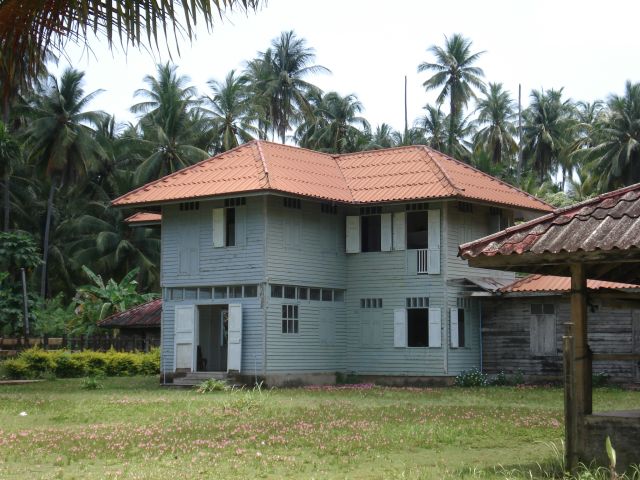
Koh Mak now has a small, one room museum housed in an 80 year old wooden house at Koh Mak Seafood Restaurant, Ao Nid Pier. The house is owned by Khun Tarin who is one of the descendants of Luang Prompakdii and he is happy to talk visitors through the display of photos that offer a brief, but fascinating insight into the lives of the islanders dating back 80 years.
This brief history of Koh Mak is adapted from the original text by Somsak Suttitanakul (Koh Mak Resort) 1993, and subsequent update by Jakrapad Taveteekul in 2002.
Once you have spent a few days on Koh Mak you will have probably seen virtually all the resorts, restaurants and shops on the island. Navigating from place to place is relatively simple and it is very hard to get lost. If you take a wrong turn you’ll find out soon enough. But to help you figure out where everything is there are some maps of Koh Mak on this page.
There is now a good Koh Mak map of the island available for free from many hotels and businesses. This is produced by a company that makes travel guides for Koh Chang. The 2017 version is below. ( It may take a while to load ) Download the PDF here.
The map below shows the layout of the island and the roads, although some are more dirt track than paved road. Click for a much larger image with the resorts named. Photocopied maps like this are available from tour agents, restaurants and all resorts on the island.
This next map of Koh Mak may of more use when you are sitting in front of your computer and planning your trip. Use the controls to zoom in to see details of specific resorts, restaurants and locations. Click on the link for additional information about each place. No streetview for Koh Mak yet unfortunately.
Getting to Koh Mak, especially during the main tourist season, isn’t as difficult as you might imagine. The speedboats to the island depart from mid morning to mid afternoon.
Boats to Koh Mak leave from two mainland piers, Krom Luang pier – near Laem Ngop and Laem Sok pier, on the Laem Sok peninsula south of Trat, several times a day. Passenger boats from Koh Chang and Koh Kood also run several times a day.
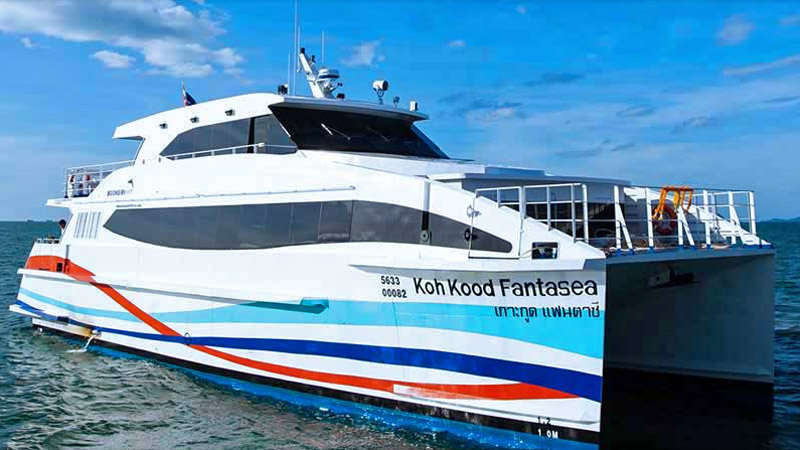
In November 2013 the new high speed Boonsiri catamaran service began operating between Laem Sok on the mainland, Koh Mak and Koh Kood. This combines the speed of the speedboat with the comfort and safety of a larger vessel. it’s not surprising that it has proved so popular.
If you are flying to Trat, driving or coming by bus from Bangkok the most convenient pier to head to is Krom Luang. Parking is available at the tour agents office at the pier. Boonsiri Ferry have a combined bus and boat ticket from Bangkok to either Koh Mak or Koh Kood.
If you are staying the night in Trat town then you can take a pick up truck taxi to either of the piers. The speedboats operating from Laem Sok pier also provide transport from Trat town centre to the pier.
From June to October, there’s no Koh Chang – Koh Mak – Koh Kood service but boat services still run from the mainland to Koh Mak. The Koh Mak speedboat times are shown below.
Boat Timetables to Koh Mak (High Season)
Slow Boat (Wooden boat for up to 50 passenger ) between Krom Luang pier, Laem Ngop – Ao Nid pier, Koh Mak
Journey time 3 hrs. Ticket price 200 Baht/person
Depart Krom Luang pier at 11:00 am and arrive at Koh Mak ( Ao Nid pier ) at 11.00am on Saturday.
Depart from Ao Nid Pier, Koh Mak at 8:00 am and arrive at Krom Luang Pier, Laem Ngop pier at 08:00 am Friday.
( These boats are also used for transporting good to the island)
Panan Speedboat, between Krom Luang pier, Laem Ngop – Koh Mak Resort pier, Koh Mak
2 x 200HP engines, 30 seats, journey time 50 minutes. Ticket price 450 Baht/person
Daily Departure from Krom Luang pier, Laem Ngop pier at 13:00 & 16:00, arriving at Koh Mak Resort pier.
Daily Departure from Koh Mak Resort pier at 09.00 and 13.30, arriving at Krom Luang pier, Laem Ngop pier.
Leelawadee Speedboat, between Krom Luang pier, Laem Ngop – Makathanee Resort pier, Koh Mak
2 x 200HP engines, 30 seats, journey time 50 minutes. Ticket price 450 Baht/person
Daily Departure from Krom Luang pier, Laem Ngop pier at 10:30 & 14:00 arriving at Makathanee Resort pier.
Daily Departure from Makathanee Resort pier at 08.00 & 11:30, arriving at Krom Luang pier, Laem Ngop pier.
Suansuk Speedboat, between Krom Luang pier, Laem Ngop – Ao Nid pier, Koh Mak
2 x 200HP engines, 30 seats, journey time 50 minutes. Ticket price 450 Baht/person
Daily Departure from Krom Luang pier, Laem Ngop pier at 11:30 & 15:00 arriving at Ao Nid pier.
Daily Departure from Ao Nid pier at 10.00 & 12:30, arriving at Krom Luang pier, Laem Ngop pier.
Seatales Speedboat, between Krom Luang pier, Laem Ngop – Ao Nid pier, Koh Mak
2 x 200HP engines, 30 seats, journey time 50 minutes. Ticket price 450 Baht/person
Daily Departure from Krom Luang pier, Laem Ngop pier at 11:30 & 14:30 arriving at Ao Nid pier.
Daily Departure from Ao Nid pier at 10.00 & 12:30, arriving at Krom Luang pier, Laem Ngop pier.
Koh Chang to Koh Mak Island Hopping
If you are planning to go from Koh Chang to Koh Mak you can take a wooden boat or speedboat during the High Season ( 1 November – 30 April ) only.
Wooden Boat between Bangbao pier, Koh Chang – Koh Mak
Operated by Bangbao Boat, 40 passengers, journey time 1 hour 45 minutes. Ticket price 400 Baht/person – includes transfer from your resort to the boat.
Daily departure from Bang Bao pier at 9.30am, arrive at Koh Mak Resort pier, Koh Mak.
Daily departure from Koh Mak Resort pier, Koh Mak at 12.00pm, arrive at Bang Bao pier.
Operated by Bangbao Boat, 20 passengers, journey time 50 minutes. Ticket price 600 Baht/person – includes transfer from your resort to the boat.
Daily departure from Bang Bao pier at 12.00pm, arrive at Koh Mak Resort pier, Koh Mak.
Daily departure from Koh Mak Resort pier, Koh Mak at 10.30am, arrive at Bang Bao pier.
Kai Bae Hut Speedboat between Kai Bae , Koh Chang – Koh Mak
Operated by Kai Bae Hut Speedboat, 20 passengers, journey time 1 hour. Ticket price 600 Baht/person – includes transfer from your resort to the boat.
Daily departure from Kai Bae Hut, Kai Bae at 09.00am, arrive at Makathanee Resort pier, Koh Mak.
Daily departure from Makathanee Resort pier, Koh Mak at 12.00pm, arrive at Kai Bae Hut, Kai Bae.
Speedboat between Koh Kood – Koh Mak
The main pier is located at Bang Bao pier, Koh Kood but the boats will stop at other piers near resorts i.e. Klong Chao pier, Sa Pan Nam Luek pier and Klong Mas pier.
Operated by Koh Kut Express Speedboat, 30 passengers, journey time 30 minutes. Ticket price 350 Baht/person – includes transfer from your resort to the boat.
Daily departures from Bang Bao pier, Koh Kood at 09.30am & 12.00pm, arrive at Ao Nid pier, Koh Mak.
Daily departures from Ao Nid pier, Koh Mak at 9.40am & 1.40pm, arrive at Bang Bao pier, Koh Kood.
** Current Low Season Schedule **
There are no scheduled services between Koh Chang and Koh Mak from mid May – 31 October . The exact date services stop is determined by the weather and demand, but it is usually in the first or second week of May. Likewise services will definitely begin again on 1 November. But some might run earlier if there is a demand.
From the mainland pier in Laem Sok. . .
Boonsiri Ferry is running daily from Laem Sok departing at 11:45am arriving at Koh Mak ( Ao Nid pier ) at 12:45am. 400 Baht. Koh Mak ( Ao Nid pier ) to Laem Sok at 10;15am. 400 Baht
Leelawadee speed boat changed the timetable. Running only 1 time a day. Laem Ngop to Koh Mak ( Makathanee pier ) 14:00 PM 450 baht Koh Mak ( Makathanee pier ) to Laem Ngop 8:00 AM 450 baht
Panan is still running 2 times a day Laem Ngop to Koh Mak ( Koh Mak Resort pier ) 12:30 PM 450 baht Laem Ngop to Koh Mak ( Koh Mak Resort pier ) 16:00 PM 450 baht
Koh Mak ( Koh Mak Resort pier ) to Laem Ngop 9:00 AM 450 baht Koh Mak ( Koh Mak Resort pier ) to Laem Ngop 13:30 PM 450 baht
Getting from Bangkok to Laem Ngop Pier
By Car:
Driving time from the centre of Bangkok to Krom Luang Pier is approx 4 to 4 and a half hours. Head out of Bangkok on the motorway ( Highway 7) After the second toll booth take the Highway 344 signposted to Ban Bueng and Klaeng. You’ll then join Highway 3 in Klaeng. Follow the signs for Chantaburi and Trat. You can either head to Trat, pass through the town centre and stay on the same road to the centre of Laem Ngop village – from where Krom Luang pier is only a kilometre away OR turn off Highway 3 about 23KM before you reach Trat and take the 3156 to Laem Ngop. This route takes you past the piers for Koh Chang. When you see a sign for the Naval Memorial, turn off and this will take you to Krom Luang Pier.
For Laem Sok it’s easier to head into Trat, drive through the town centre, follow the signs for Laem Ngop. A couple of kilometres south of the town turn left at the traffic lights. This road leads to Laem Sok, another 15 – 20 minutes drive away.
By Bus / Minibus:
The easiest way is to take the air-conditioned bus from Ekkamai Eastern Bus Terminal Station direct to Laem Ngob, Trat, leaving three times a day at 06:30 am , 07:30 am and 09:45 am. And returning from Laem Ngop at 12:30 pm, 2:00 pm and 4.00pm. Journey time is approx 5 hours and ticket price is 250 Baht/person.
Alternatively take a bus to Trat from Ekkamai Bus Station or the Transportation Terminal at Bangkok Airport. These will connect with shared pick up truck taxis that will take you from Trat bus station to the ferry pier for an additional 60-80 Baht/person
Minivans from Victory Monument, Bangkok to Trat, and the ferry piers to Koh Chang and Koh Mak, also run every hour from 05.00am to 06.00pm. These cost 300 Baht. They are more cramped than the big bus but are fast and good if you don’t have much luggage. The minibus back to Bangkok from the mainland pier can be booked when you are on Koh Mak.
Laem Sok pier is harder to get to as it is in an out of the way location. However, Boonsiri Ferry and the speedboat companies provide free transport from Trat Bus Station or from near Trat Department Store in the town centre to the pier, 20km away.
Boonsiri Ferry also sell combined bus and boat tickets for people coming from Bangkok who want to simplify the task of getting from the city to the island.
By Air:
There is only one airline flying from Bangkok to Trat, Bangkok Airways, which has 3 flights per day to Trat Airport. Book online at www.bangkokair.com. From Trat Airport the airport minibus can take you to Krom Luang Pier for 500 Baht/person. Alternatively a private transfer can be arranged which would work out much cheaper for families or groups travelling together.
By Private Van:
Pick up at your hotel in Bangkok or Bangkok Airport direct to Krom Luang pier, Laem Ngob. Driving time is approximately 4 to 4 and half hours. The driver will be happy to stop for snack, coffee, lunch on the way.
Private Transfer Prices
4,400 Baht by private car – 2 persons Maximum.
4,900 Baht by VIP minibus ( Toyota Commuter ) – 5 persons Maximum.
5,100 Baht by VIP minibus – 5 to 8 persons Maximum.
Prices include VAT, driver, gasoline and expressway tolls but do not include boat tickets to Koh Mak. These can be bought at the pier. Payment can be made in advance by Paypal or in cash , to the driver, on the day of the transfer.
Koh Mak isn’t really an island for a wild and crazy activity holiday. You won’t find jetskis, banana boats, ATVs, a water park or golf course here. Of course, there are some activities, trips and tours available but in the main it’s an island suited to relaxing, unwinding and getting away from it all. Here is a quick rundown of things to see and do once you finish your holiday reading or get bored of suntanning yourself. ( Or have kids, partner or spouse who you need to keep occupied.)
For more details of what to see and do, call in and speak to Ball & Oy at Coco Cafe, near the entrance of Ao Kao Resort.
Art
As you travel around Koh Mak, you may well notice some weird and wonderful statues – for example a giant crab or naked female rubber tapper. These are creations of a local artist, Khun Somchai. he is responsible for the, now sadly overgrown, sculpture garden called ‘The Kingdom of Somchai’s Affection’ ( pictured above ) which is located a few hundred metres inland from Koh Mak Resort.
One view is that his works mirror his perception about affection in art and individual freedom. You decide, but it probably isn’t the place to take young kids – unless you want to answer some questions on female anatomy.
Beach Volleyball
You can usually find a game of beach volleyball in progress at Baan Koh Mak or Ao Kao Resort. Just show up late afternoon and you’ll find someone who wants a game.
Cooking Class
Smile Koh Mak cooking school, run by Leng offers Thai cooking classes for small groups of up to 4 people. You’ll learn all about the ingredients that go into your favourite dishes and then learn how to make them. Leng will teach the class in English and pass on the tips and techniques for traditional Thai cooking that her father passed on to her. So you’ll learn how to make the dishes the correct, original way.
Transport to/from your resort to the cooking school, located right by the sea close to Koh Mak Seafood Restaurant near Ao Nid Pier, is included in the price and you’ll also receive a cookbook with the recipes in it for the dishes you have made. A fun day away from the beach.
Cycling
The lack of traffic combined with the flat terrain and and multitude of shady trails through the rubber and coconut plantations make Koh Mak a great place to explore by bicycle. The island is small enough that you can’t get lot but large enough for you to discover fishermen’s hamlets and deserted beaches. Bicyces are available for rent and many resoirts now have free bicycles for guests to use.
Head to Coco Cafe and pick up a free bike with your coffee, they also have maps and recommended routes for you to try in order to see different parts of the island.
Hill Walking
Koh Mak is a relatively flat island. However, the land does rise to just over 100metres above sea level near the western shore . There is a trail that starts near Baan Ing Kao Resort but it is probably best to find someone to guide you. During the rainy season there is a small waterfall on the hillside.
Kayaking
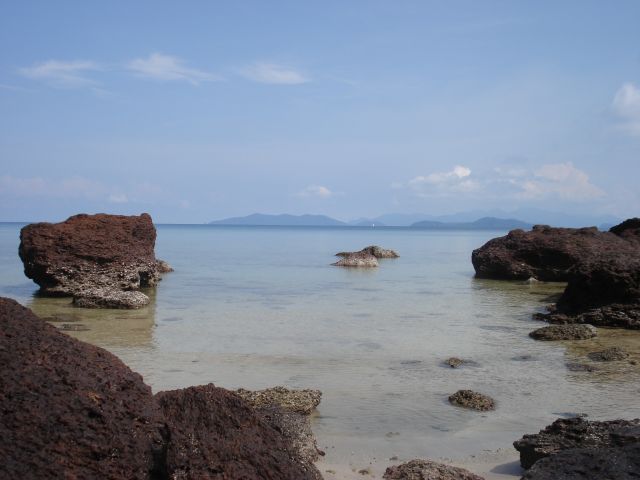
Sea kayaks can be hired from several resorts on the island and having a handful of small islands dotted around Koh Mak, means that you will have a ready made destination when you head out to sea in your kayak. If you are staying at Koh Mak Resort or Cococape then you’ll have Koh Kham, with it’s small white sand beach and black volcanic rocks, about 1km away and the smaller island of Koh Pee also lies within easy reach.
To the northeast of Koh Mak is the private island of Koh Kradad, where you’ll find a large herd of deer, is a couple of kilometres paddle from Cinnamon Resort & Greenview Resort. And if you are staying on the busier Ao Kao Beach, Koh Rayang Nok and Koh Rayang Nai are within easy paddling distance. Expect to pay around 100 Baht/hour or 500 Baht/day for a 2 person kayak with lifejacket & paddles provided.
Koh Kood Day Trip
A full day trip to Koh Kood by private speedboat can easily be arranged. You’d leave Koh Mak at around 9am and return back at 4pm. During the day you’d see the sights on Koh Kood including the waterfall, beaches and fisherman’s village. A stop at Koh Maisee pearl farm can also be included. Prices are around 2,000 Baht/person – minimum 4 people. Includes lunch.
Massage & Spa
More resorts now have their own massage staff and some also offer spa treatments. Expect to pay around 250-300 baht for a beach massage. All resorts now have spas with a range of treatments, try Seavana Resort and follow it with a swim in their beachfront pool.
Motorbike Hire
There are a few paved roads on Koh Mak but the only vehicles belong to resorts and so it’s rare to see any traffic other than motorbikes on the roads. Scooters are available for rent for 300 – 400 Baht/day. Most of the roads are pretty good, even the dirt tracks are relatively smooth but care is needed as a remote plantation trail isn’t the place to get a puncture. Gasoline is available either from a couple of small filling stations with a single drum and hand pump or from shops and restaurants who sell old whiskey bottles full of fuel by the roadside.
Night Fishing
As on any island, fishing has long been the mainstay of the local economy, but whilst most locals don’t fish for a living nowadays they still enjoy spending time out on the sea. The best time to fish in the waters around Koh Mak is from dusk till dawn. The fishermen will leave Koh Mak early evening and first catch some squid to use as bait. They will then head to the deeper water and the fishing grounds. Private trips can be arranged for 1,000 – 4,000 Baht for a few hours night fishing or join one of the scheduled trips that run 3-4 times a week in High Season. These cost around 500 Baht/person.
Private Islands
Close to Koh Mak lie three private islands – Koh Kham, Koh Rayang and Koh Kradat. Koh Rayang is the easiest to get to with a regular longtail boat service running from Makathanee Resort pier. It is home to one small resort – Rayang Island Resort and as such non-residents must pay an 80 Baht fee to land on the island. This gives you the use of a sunlounger on the beach and a free soft drink in the restaurant.
Koh Kham was sold to a property developer who is in the process of destroying the natural beauty of the island by building a luxury resort. There is a small bar on the island and a boat service is available from Koh Mak Resort. Alternatively, it is easy to kayak there. As with Koh Rayang a small fee is charged to visitors to the island.
Koh Kradat is definitely worth a day trip. Cinnamon Resort can arrange a boat for you. There is also a 100 Baht entry fee to the island but this includes a tour by tractor to see the island and its herds of deer. Plus a stop at a beautiful untouched beach. There’s a small restaurant near the pier that doesn’t have a menu, the staff just make you what you want – but don’t expect much choice other than basic Thai dishes.
Rubber Tree Plantations
Koh Mak was the first island in Thailand to be planted with rubber trees. You’ll see some very old rubber plantations in the centre of the island which have now fallen into disuse and are overgrown. But look around and you’ll find neatly manicured plantations where the rubber is collected daily, usually daybreak or very early morning before the sun gets too high in the sky. The white latex is collected and mixed with chemicals to set it and then hand rolled into mats which are hung to dry. These are then sold.
Scuba Diving
There are three dive companies on Koh Mak. BB Divers, a large company with their main offices on Koh Chang and Koh Kood plus Paradise Divers and Koh Mak Divers both of which have been running dive centres on the island for several years. The latter having been on the island for over a decade. All offer the full range of PADI certified dive courses plus dive trips for qualified divers . Most dive trips will take in the sites around Koh Rang, to the west of Koh Mak. This is the same area as dive trips from Koh Chang head to – so if you plan on diving on both Koh Chang and Koh Mak check to make sure you wont be visiting the same sites.
Snorkelling
Daily snorkelling trips and boat trips that take in the islands around Koh Rang, the best snorkelling sites in the area, and also some of the other islands close to Koh Mak can easily be booked once you are on the island. Expect to pay from 600 to 1,200 Baht for a full day trip – depending on where you go and what type of boat you go in.
Temple
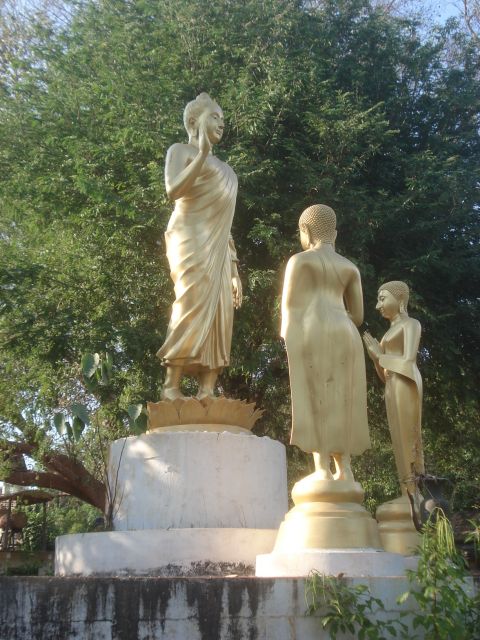
The Buddhist temple on Koh Mak overlooks Ao Nid Bay. It is a small temple which has several resident monks and is the focal point for the community with the covered hall also used as a meeting room or polling station. Look closely at the golden statue of Buddha and you’ll notice that it is more curvaceous than you might expect. The more feminine form is a reminder that the construction of the temple was paid for by the wife of the founder of the island.
YouTube is a great source of travel information as you’ll find many videos taken by visitors to different locations the world over. These give you the true picture with no gloss or sales pitch.
Here are just a handful of Koh Mak videos that can be found on YouTube. Check them out and decide for yourself if this is the island for you.
One Day on Koh Mak
Koh Mak 2016
Cat Helping to Pick the Crab For Lunch at Koh Mak Seafood
Sustainable development and low carbon tourism go hand in hand. If you have read the History of Koh Mak, you will have learned that the island is still 80% owned by descendants of a wealthy merchant who was a tax collector for the Thai King.
Therefore, unlike many islands the owners of Koh Mak comprise well educated and well travelled families many of whom have studied or lived in Europe or the USA.
They are more open to new ideas and also realise that what may make money in the short term is not necessarily the best solution long term when effects on the natural environment are concerned. It was in 2014 that the scheme to promote the island to foreign visitors as an eco-friendly island was launched.
Have you seen any other islands in Thailand where the local authorities actively solicit outside advice and know how in order to offset the negative effects that tourism is having on the island and promote sustainable development?
Koh Mak is a small and friendly island and there are absolutely no plans to change this. The local families have no intention to become another Phuket or Samui. The goal is to develop the island in a sustainable way in harmony with nature. In order to do this, you might be able to help.
If you are an expert in an area that is useful to the sustainable development of the island, we would like to hear from you. Here is a list topics that are important for the future of Koh Mak, however, if you have any other areas of expertise that you think will useful for us, we welcome your input.
Art
Koh Mak is an inspiring place. So if you are able to use some of the local resources and turn them into something stunning, we would like to welcome you to the island. There are lots of places and spaces here where a little art could make a really nice contribution.
Environmental Protection
Koh Mak is a beautiful island and we want to make sure it stays this way. In order to do this, practical policies that protect the environment both on the island as well as in the sea around it need to be in place.
Human Resource Development
The key to building a future for the island is the people. We need to make sure that local people have the knowledge and expertise in order to sustain their life on the island. We see sustainable tourism as a key economic driver of Koh Mak’s future. If you are able to help local inhabitants learn the necessary skills (English, hospitality management etc.) we would like to hear from you.
Logistics and Transportation
Koh Mak is an island and therefore quite remote. It is a good thing that there is no direct highway from Bangkok to Koh Mak, however, this means that transportation and logistics can be a bit challenging at times. Therefore, a well organised plan to manage transportation to and from the island as well as eco-friendly transportation on the island itself would benefit everyone
Marketing
Koh Mak is a great little island and we would like to share the island’s beauty with visitors from all around the world. We don’t have a big marketing budget, however, we do appreciate the importance of Marketing in order to attract visitors. If you are a marketing wizard and know something about electronic media, we would appreciate your help.
Natural Resource Management
Koh Mak has a lot of natural resources both on the ground as well as under water. The island’s natural beauty is a key driver or tourism so that must be preserved. However, overuse is an issue and the island should develop in a sustainable manner. Natural resources therefore need to be managed carefully.
Planning/Zoning
So far, every resort owner has just done whatever they wanted to do – within the planning laws of course. However, it would make sense to come up with a development plan that looks at the island as a whole in order to ensure a sustainable development. So if you have ideas on how other islands have overcome this problem and worked to achieve a Masterplan for a 10-20 year future time span, we’d love to hear about it.
Value Added Processing
On Koh Mak we grow rubber and coconuts. So far, we ship most of the things that we grow to the mainland unprocessed. In order to create value for our island, we would like to process the rubber and coconuts locally on Koh Mak. Building big factories is definitely not what we want. But if you can think of a idea how we can add value to what we grow in a sustainable way, we would like to hear it.
Waste Management
We already do waste management and recycle as good as we can. However, everything is shipped back to the mainland. We think there is an opportunity to recycle things locally. If you got any ideas on how to approach this, please get in touch.
If you think you have what it takes to help us make Koh Mak a better place to live and visit, please get in touch with us. While we cannot pay any money for your expertise, we would be more than happy to provide you with discounted accommodation.
Just send us your CV and a brief description of your ideas how you could help us develop our island in a sustainable way and we will get back to you shortly. We welcome individuals and small groups.
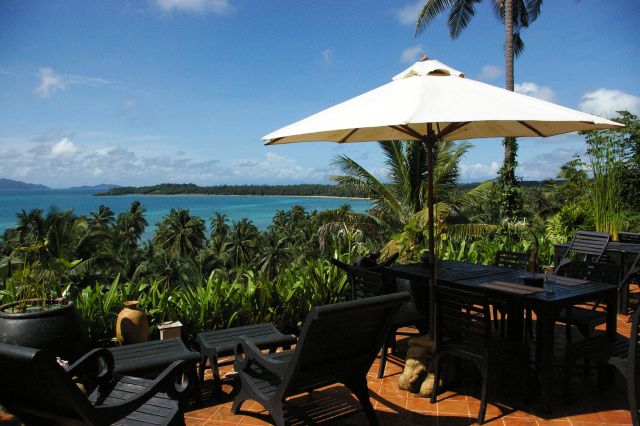
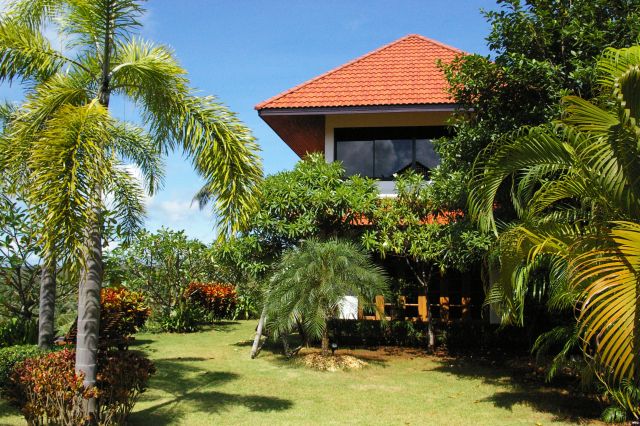
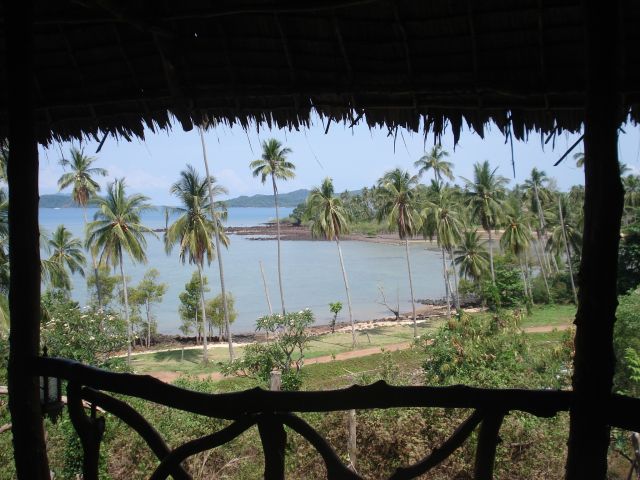
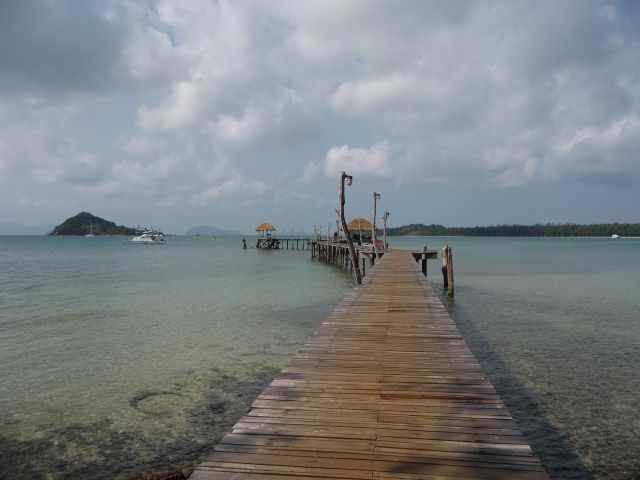
Here’s just a sample of photos of Koh Mak island. Some resorts, beaches and views that await you on this hidden gem of an island. You’ll find more pictures of resorts, restaurants and beaches in the relevant sections on this site. ( Click on the thumbnail to see the full size photo.)
Koh Mak island is an ideal place to relax, explore, calm your mind and soothe your senses and has so far has been relatively unscathed by the effects of tourism despite being within easy reach of Bangkok. But for some it might be a little too quiet and undeveloped still. So here’s a quick run down of what to expect on the island.
Most of the resorts on the island line the long, southwest facing beach known as ‘Ao Kao’ which is home to over a dozen small resorts and a number of small roadside restaurants, cafes and shops. A 15 minute walk away, on the opposite, northwest, shore, an equally long curving swathe of sand , Ao Suan Yai, is home to the ever expanding Koh Mak Resort, the excellent, upmarket Seavana Resort and the budget Suchanaree Bungalows. Elsewhere you’ll find resorts scattered around the fringes of the island, some rather remote and not within walking distance of any shops or restaurants. So location is worth double checking when you make a booking.
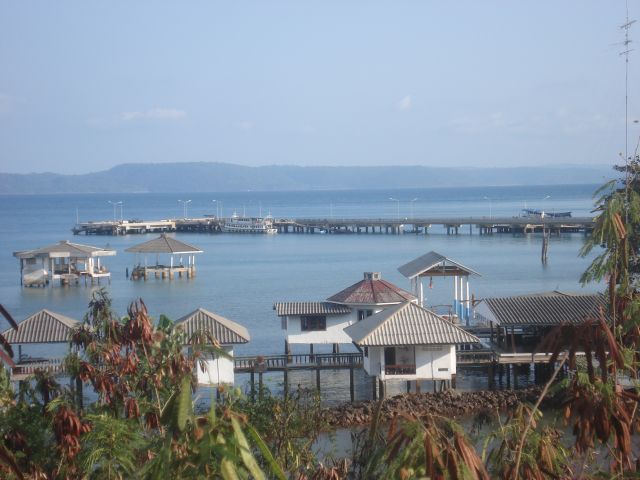
Whilst most visitors arrive at either the Koh Mak Resort pier or Makathanee Resort pier on Ao Kao, the island’s largest pier is in Ao Nid Bay on the southeast of the island. This was the main settlement on the island and is where the larger Boonsiri Catamaran ferry fishing boats and larger supply ships dock. Overlooking the bay is Koh Mak temple.
Driving or cycling round Koh Mak you are bound to pass Koh Mak junction in the centre of the island, here you’ll find makeshift gas stations, minimarts, cheap restaurants, a snooker hall, laundry, the school and local clinic. See the Koh Mak Map for more details.
Banks / ATMs / Currency Exchange
There aren’t any, so you may have to choose between paying for your resort in advance or carrying cash with you to the island. The larger resorts all take credit cards and in an emergency you can get a cash advance at larger resorts on your credit card but you will be charged a fee for doing this.
Schools
The island has it’s own kindergarten and primary school which are located in the centre of the island. The kindergarten is privately funded, mainly by donations from resort owners and expat home owners on the island.
Electricity
Electricity on Koh Mak is 24 hours / day and up until 2016 it was provided by the island’s own power station – or more accurately four generator trucks which are located in the centre of the island near the local government office. However, a new undersea cable was laid and now the island is connected the Thailand’s national grid. Resorts also have their own back up generators in case of power failures.
Health
Medical Insurance is recommended as it isn’t as easy to get to a well equipped hospital or clinic as it would be if you were staying on a larger island such as Koh Chang. There are no pharmacies on the island, so if you need specialised medication bring a supply with you. There is a local clinic in the centre of the island, not far from the school. This is staffed by a team of three nurses and is fine for obvious ailments such as cuts and bites. For more specialised care you would have to go to Koh Chang or Trat. In emergencies a speedboat can be arranged at short notice and, for people with good insurance, a helicopter can be called in severe emergencies. It is a 45 minute journey by speedboat to the mainland where an ambulance would be waiting to take you to Bangkok Trat private hospital.
Internet & Telecommunications
There are several internet cafes on the island and all resorts, large and small also have internet access for guests. Most places offer this free to guests. Most internet connections are via satellite as the few landlines on the island aren’t suitable for high speed ADSL. There is 3G mobile phone coverage across the island and so connection to the internet via mobile phone is possible just about everywhere. The island’s main post office is located at Koh Mak Resort and there is a single postman who delivers mail island wide.
Jellyfish
The southern Thai islands have long been home to deadly jellyfish however, it is very rare that they venture this north in the Gulf of Thailand. Since 2007, there have been several documented cases of non-fatal Box Jellyfish attacks & sightings around Koh Mak. There is little that you can do to prevent such attacks and swimming in the sea off any tropical island can be dangerous. However, staff and resort owners on Koh Mak have been trained as to how to identify serious jellyfish burns and negate the effects of the poison. All resorts keep a good supply of vinegar on hand in case of emergencies. Some resorts eg Seavana, Koh mak Resort, Ao Kao Resort and Big Easy now also have nets in the sea to cordon off safe areas for guests to swim worry-free.
Malaria
There are mosquitoes but there is no malaria on Koh Mak. Local health officials have long since eradicated it from the island and there haven’t been any cases for over 15 years.
Sandflies
These 2mm long insects are probably the cause of the most complaints by visitors to the island. They thrive on quiet, undeveloped beaches here there is shade and little wind. Thus Koh Mak is an ideal breeding ground. The females make a beeline for any animal, including humans, in the run up to them laying eggs as they need a supply of fresh blood. Their saliva contains histamine, which means that their bites can be very itchy.
However, people react differently to their bites – many come up with small red spots approx 1cm in diameter, others appear to be immune or the bites have little effect. Often two people go to the beach, one develops red spots the other doesn’t. Vitamin B1 can help provide immunity to bites and it is also possible to become immune to sandfly bites if you have been exposed to them regularly over a period of time.
Local wisdom says coconut oil is an effective deterrent, as mosquito repellent doesn’t always work.
Shopping
The larger resorts have small minimarts selling snacks, drinks, sun lotion, basic medical and sanitary items etc and you’ll also find little shops selling basic good dotted around the island. In addition there are a few small souvenir shops but if you also plan to spend time in Bangkok, you’d be better off doing most of your shopping there, or even on Koh Chang.
Transport
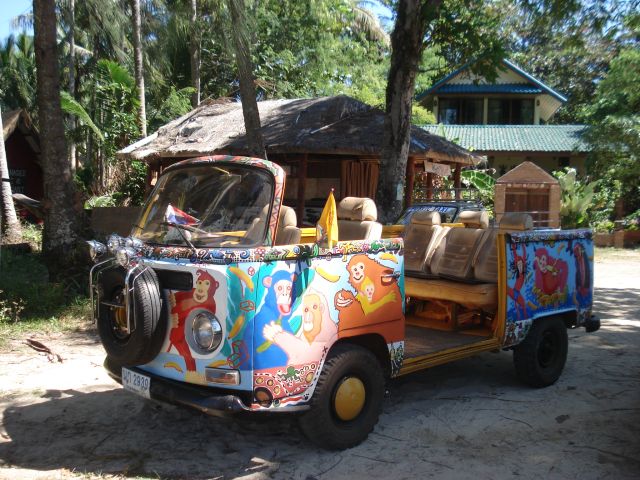
There isn’t any public transport on the island yet – other than a pick up truck taxi service. This charges a flat rate of 50 Baht/person pretty much anywhere on the island. Otherwise, you will have to walk, rent a mountain bike or a scooter in order to get around. Resorts in quieter areas will provide free transport to the main beaches for guests. Many resorts now also offer free bicycles for guests.
Don’t forget to check out the family friendly bike tours offered by Coco Cafe. Daily during High Season at 9am and 4pm. A guided two hour, 8Km easy ride.
Water
There is a public water supply on the island but this isn’t very wide reaching and so most resorts rely on their own wells and bore holes for year round fresh water.